
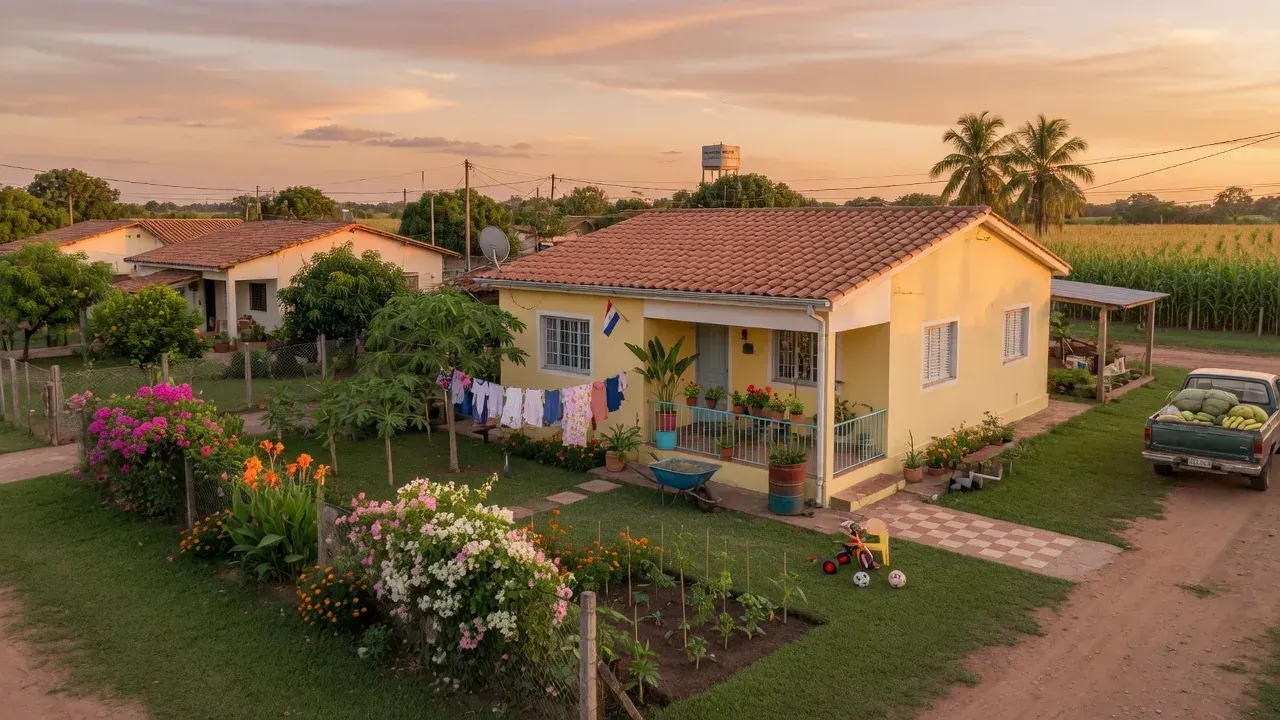
How Much Does a House Cost in Santa Rita, Paraguay?
There is no single responsible figure for the cost of a house in Santa Rita. Neighbourhood, plot size and shape, floor area, construction quality, utilities, condition, currency, and payment terms can make two apparently similar offers fundamentally different. An isolated figure soon becomes outdated and may omit repairs, transaction expenses, commission, or unresolved documentation.
The useful answer is a current range built from genuinely comparable properties. This guide explains how to create that range, assess the house itself, and organise legal due diligence. It is not a valuation, structural survey, or substitute for independent legal advice.
What influences value in Santa Rita
Santa Rita is a regional centre in Alto Paraná with strong links to agriculture, commerce, and services. Demand is not distributed evenly across the city. Access to the centre and major roads, paving, drainage, local services, and the character of the street all affect value. The words “Santa Rita” alone do not define the property market around a particular house.
Land is a major part of the comparison. Frontage, depth, shape, level, access, and potential use distinguish plots with the same stated area. For the building, design, materials, ventilation, roof, installations, maintenance, and the quality of extensions determine the likely cost after purchase. A newer house is not automatically better built, while an older, well-maintained home may require less immediate work.
The advertised terms also matter. A listing may use US dollars or Paraguayan guaraníes, and a prominent number may be a deposit or instalment rather than the full price. Establish the total and proposed contract currency before comparing it with anything else.
A method for building a realistic price range
1. Define the property you need
Write a short specification covering acceptable areas, minimum plot size, approximate floor area, bedrooms, bathrooms, parking, home-office needs, road type, and maximum renovation level. Separate requirements from preferences.
Without this specification, a compact central home can be compared with a much larger property far from daily services. The same bedroom count does not make them equivalent.
2. Collect comparable offers at the same time
Find at least five recent properties that broadly meet the specification. Record the date, source, contact, area, plot, floor area, condition, currency, asking price, and terms. Confirm that each one remains available and remove duplicated advertisements.
An asking price is not evidence of the final sale price. It is useful for identifying the current advertised range and choosing inspections. Do not assume a standard negotiation discount: demand, urgency, documentation, and payment structure vary from one seller to another.
3. Put the information on the same basis
Convert offers into one analysis currency using the same day's rate, while preserving the currency proposed for each contract. Separate the property price from commission, taxes, professional fees, certificates, transfer expenses, repairs, and furniture. Note whether equipment or additional land is included.
Price per square metre is only a secondary reference. Check whether the area refers to land or building and how it was measured. Similar-sized homes can differ greatly in access and condition.
4. Inspect the strongest candidates
Visit at least three candidates with the same checklist. Return to the finalist at a different time and, if practical, after rain. Check noise, traffic, drainage, phone reception, water, heat, and ventilation.
5. Adjust for post-purchase expenditure
Obtain independent estimates for significant repairs. A lower-priced house may need a roof, rewiring, cooling, drainage, or documentary work relating to an extension. Compare acquisition price plus transaction expenses and essential remedial work, not headline price alone.
Comparison field: Area and road type
Comparison field: Plot and floor area
Comparison field: Condition and repairs
Comparison field: Water, power, and internet
Comparison field: Total price and currency
Comparison field: Estimated additional costs
Comparison field: Documentary matters to verify
Evaluate the neighbourhood as part of the purchase
Travel to work, school, shops, and healthcare at the times your household would actually use them. Ask about dust, noise, heavy vehicles, flooding, and interruptions to services, then verify important claims. A quiet Sunday viewing says little about weekday activity.
Check paving, drainage, lighting, vehicle access, and transport options. Car dependence affects the budget and the independence of each household member. A short distance may still be inconvenient when road conditions deteriorate in rain.
Look at surrounding land use. Workshops, storage, commercial premises, and freight traffic can alter noise and movement. The address must suit your routine.
Verify utilities at the exact address
Identify the water, electricity, and internet providers, account holders, and outstanding sums. Ask to see recent bills, while recognising that your consumption may differ.
Run taps, flush toilets, and watch drainage. Ask about tanks and pumps and have their installation checked. An electrician should assess the board, protective devices, earthing, cable capacity, joins, and ability to support air conditioning and other appliances.
Confirm internet availability for the exact property. Service in the surrounding district does not ensure that installation is available on that street. Remote workers should test the connection and establish what happens during power interruptions.
Drainage includes the slope of the plot, yard, pavement, roof, gutters, walls, and water discharge. Damp marks, mould, or recently repainted patches call for further questions. An independent inspection is more reliable than a verbal assurance about past rainfall.
Inspect the physical condition
Engage an independent qualified professional for the final property. The purpose is not to guarantee that a defect will never appear. It is to describe visible condition, identify warning signs, and recommend further investigation or likely repairs.
Check cracks, deformation, roof framing, coverings, gutters, ceilings, and areas below bathrooms and tanks. Only a competent assessment can distinguish superficial finishes from a serious concern. Test doors, windows, plumbing, and included equipment; consider sunlight, ventilation, and cooling.
Do not assume walls and fences match the registered description. Have documents, survey information, and physical boundaries compared by specialists. Check extensions, pools, and outbuildings against records and applicable requirements.
Title and legal due diligence
Before paying a deposit, an independent lawyer or suitably authorised professional should investigate the seller's identity and authority, ownership, property description, liens, restrictions, disputes, and obligations that could affect the transfer. Required searches and documents depend on the case; a generic checklist cannot provide legal certainty.
Compare names, measurements, location, and identifiers across all records. If a person acts under a power of attorney, its validity and scope need examination. Co-ownership, inheritance, a company, a spouse, or occupants may introduce further consents and checks.
Investigate property taxes, charges, and utility accounts and state in writing who is responsible for each one. Material supplied by the seller should be confirmed through the appropriate registers or authorities. A scan or photocopy does not prove that the present legal position is unchanged.
Contract, deposit, and payment
Do not send a deposit simply to “hold” the house without a reviewed instrument. The contract should identify the parties and property, state price and currency, set the payment schedule, define conditions for completion, allocate expenses, establish possession, list included items, and address default.
If the purchase depends on finance, inspection, regularisation, or satisfactory title review, express those conditions clearly. Avoid blanks, parallel prices, and vague property descriptions. Make traceable payments to the correctly identified party and retain evidence.
Where different currencies are involved, define the exchange reference and date. A verbal understanding about conversion can materially alter the final cost.
Costs beyond the advertised price
Include independent legal work, searches, inspection, a survey where appropriate, taxes, transfer charges, disclosed commission, moving, repairs, utilities, maintenance, and currency costs. Request a case-specific estimate before signing: requirements and liabilities depend on the transaction and may change. This guide offers no legal, tax, financial, or investment guarantee.
Warning signs
- Pressure to pay before independent checks are complete.
- Refusal to provide records or permit an inspection.
- Differences in location, measurements, owner, or description.
- A price far outside comparable offers without a verifiable reason.
- A request to pay a third party absent from the contract.
- Guaranteed appreciation, rental income, or resale claims.
- Substantial extensions with no clear documentary history.
- A contract that leaves currency, expenses, or possession undefined.
Related guides
- Santa Rita, Paraguay: a practical city guide
- Is living in Paraguay right for you?
- Safety in Paraguay
- Hernandarias: visitor and relocation guide
Recommendation
Establish the cost of a house in Santa Rita by comparing genuinely similar properties offered during the same period. Inspect the finalists, add essential repairs and transaction expenses, and proceed only after independent physical and title checks. If a seller will not allow enough time or information to verify the property and contract, step away. Good value must work in the location, total budget, building condition, and documents.